How to Identify Pure Hexane-Free Castor Oil (Buyer Guide)
Castor oil is a golden, thick, and centuries-old, reliable ingredient in every industry. Its value can be seen in terms of improving personal care formulations, industrial lubricants, and bio-based materials. If we research its unique chemical composition, it has high ricinoleic acid content. With the changing nature of industries and the increasing demands of quality, the concern has no longer been on the use of castor oil but on whether it is pure and what its extraction process is.
Pure hexane-free castor oil is crucial in this context. Consumers no longer feel satisfied with generic oil grades; they need transparency, safety, and sustainability. As a manufacturer, formulator, or bulk purchaser, knowledge of where to find the actual hexane-free oil directly affects the product performance, compliance with the regulations, and brand image.
Let’s know about pure hexane-free castor oil and how to identify it.
What is Pure Hexane-Free Castor Oil?
A petroleum-derived solvent, known as hexane, is a petroleum-derived solvent that is commonly used in the traditional oil extraction techniques to achieve maximum production. Although it enhances efficiency, it may leave residual traces and undermine the natural integrity of the oil.
Pure hexane-free castor oil, on the other hand, is obtained by mechanical processes, like cold pressing or expeller pressing. These processes ensure that the oil is not exposed to any chemical solvents, which may change the natural composition of the oil. As a result, we get a pure, cleaner oil, which is more appropriate when purity is of the essence, like in pharmaceuticals and personal care.
Why Choosing Hexane-Free Matters
The decision to select hexane-free oil is not merely a quality improvement but a change towards responsible sourcing and less-harmful end-use applications. The extraction of solvent-free oil maintains its original structure, a factor that leads to its functionality and reliability in other industries.
In terms of a health perspective, the chemical residues are absent, and it is less likely to cause irritation or toxicity, especially in skin care and medical preparations. Solvent-free extraction is more environmentally friendly. To businesses, the option reinforces brand positioning, especially in markets where clean-label and sustainable products are on the rise.
10 Benefits of Hexane-Free Castor Oil
The increasing popularity of castor oil benefits is directly related to the benefits of solvent-free extraction. The following are the 10 advantages of hexane-free castor oil that make it the preferred option:
- It provides deeper skin nourishment due to intact fatty acids.
- It promotes healthier hair growth as it strengthens roots naturally.
- Its anti-inflammatory effects improve therapeutic uses.
- It offers improved shelf stability with less degradation risk.
- It guarantees enhanced absorption in cosmetic and medicinal formulations.
- It delivers consistent performance in industrial lubricants.
- It is safe for pharmaceutical-grade usage.
- It aligns with sustainable and environmentally friendly sourcing.
- It removes chemical after-effects, thus being suitable for sensitive users.
- It meets premium quality standards required for global markets.
How to Identify Pure Hexane-Free Castor Oil
There are various factors to be taken into consideration in order to determine hexane-free castor oil. The buyers must be more analytical and not just rely on the labels.
1. Extraction Method Transparency
The extraction method is the first and most trustworthy indicator. Authentic products will clearly indicate that they are cold-pressed or expeller-pressed.
Where the label is ambiguous or merely states refined, it might be prudent to find out further on this topic, as refinement does not always imply that there are no solvents.
2. Certifications and Documentation
Trustworthy manufacturers such as Ambuja Solvex follow high-quality standards and offer supporting documents. Such certifications as ISO or GMP and a Certificate of Analysis (COA) will show that the product meets the international standards.
These documents mean transparency, which is a significant element in long-term relations with suppliers.
3. Physical Characteristics
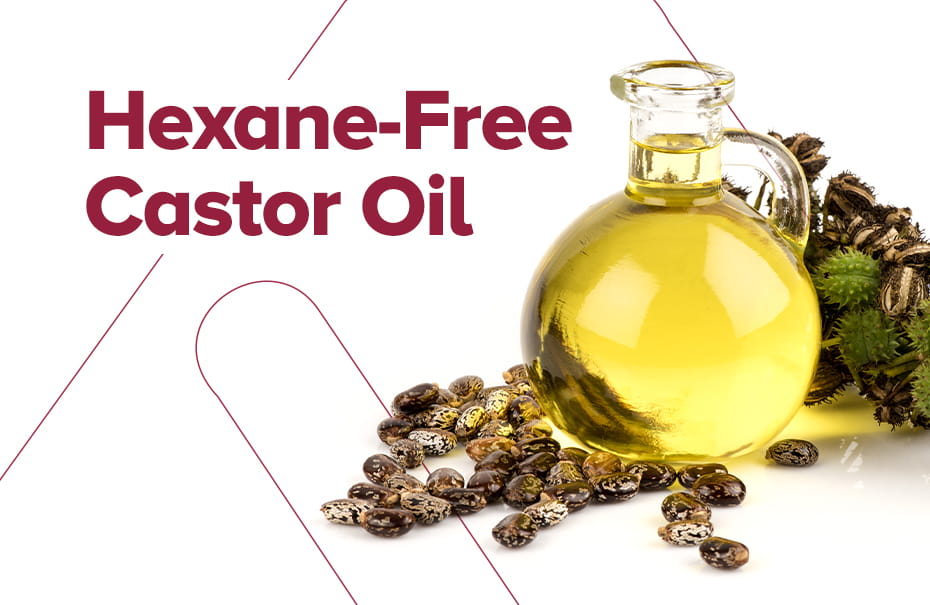
The look of the oil can reveal a lot about its processing. Pure hexane-free castor oil is usually of a pale yellow to golden colour, thick in consistency, and possesses a natural, pleasant scent.
Oils that seem too clear or too processed might have gone through extra refining processes.
4. Lab Testing and Reports
Lab verification is essential to bulk buyers and industrial users. A trustworthy supplier will show detailed reports of zero hexane content, fatty acid profile, and purity.
This information not only validates quality but also ensures it meets regulatory requirements.
5. Supplier Credibility
The manufacturer’s reputation is considered a major factor. Suppliers with a good export record and a long operating history are better placed to provide genuine products.
This helps in assessing their experience, client base, and sourcing practices to offer useful insights.
6. Supply Chain Transparency
Traceability is becoming increasingly important in global markets. The data about the sourcing of the seeds and the mode of extracting the oil can be utilised in order to achieve uniformity and prevent any possible risks of contamination or unethical practices.
Castor Oil Applications Across Industries
The flexibility of castor oil is one of its greatest strengths, and this makes it an essential element in various industries.
- Its effectiveness and safety have made it common in pharmaceutical preparations like laxatives, drug delivery systems, and anti-inflammatory preparations.
- It is a major ingredient in cosmetic and personal care products such as hair oils, moisturisers, and lip care solutions, where purity directly affects performance.
- Castor oil is used in the industrial sectors as a high-performance lubricant, hydraulic fluid, and coating with special focus on areas that need thermal stability.
- It is also a vital raw material in the production of bio-based polymers such as nylon 11 and polyurethane, which is a part of the shift towards sustainable materials around the globe.
- The other use of pure, organic castor oil is in pesticides and soil conditioners in agriculture, which further demonstrates that this product is multi-purpose.
The worldwide change towards clean and sustainable products is increasing the need for hexane-free oils. Indeed, the world castor oil market is estimated to be USD 2.34 billion by 2033, owing to the growing demand for variants of environmentally friendly and high-purity castor oil. Therefore, the industry needs pure hexane-free castor oil.
What to Keep in Mind When Buying
#1 Things You Should Avoid
Although there are different products available in the market, not every product can meet the required standards. Consumers must be aware of vague labelling, particularly where the method of extraction is not indicated. Extremely low pricing is another sign of caution since solvent extraction is frequently used to cut down on costs.
Another concern is the lack of documentation. Suppliers that fail to provide laboratory reports might be of low quality.
#2 Choose the Right Supplier
Choosing the right supplier goes beyond procurement; it directly impacts product quality and business success. One partner, like Ambuja Solvex, can offer consistency (batch-to-batch), which will help manufacturers to offer consistency in the end products.
In addition, the collaboration with such reliable suppliers will contribute to adherence to international standards and avoid rejections or recalls. It also builds brand credibility, particularly in the markets where quality and transparency are important differentiating factors.
Conclusion
Determining pure hexane-free castor oil involves technical expertise, attention, and selection of reliable suppliers. Checking extraction methods and certifications, physical properties and laboratory reports are all essential steps towards ensuring quality and reliability.
As industries increase their attention towards sustainability and performance, high-purity castor oil will continue to be in high demand. The partnership with existing manufacturers like Ambuja Solvex ensures availability of consistent, compliant, and high-grade solutions.
We deliver business excellence with confidence.
FAQs
1. What makes hexane-free castor oil better than regular castor oil?
Hexane-free oil is extracted without chemical solvents and is safer, purer and can be used in sensitive and high-grade applications.
2. How to identify that castor oil is hexane-free?
You can review COA reports, extraction method labels, and lab results, with zero solvent residue being ensured.
3. Can hexane-free castor oil be used in industries?
It is good in terms of stability and performance and, therefore, is used in lubricants, coatings and when making polymers.
4. Why is hexane used in oil extraction despite concerns?
Hexane is more effective for extraction and is also cheaper, but it is not effective in high-quality applications because it is not able to leave a residue.
More Insights From The Castor World

Top 5 Natural Skincare Myths, Debunked!
Read More