What Is Castor Oil? Types, Properties, & Uses
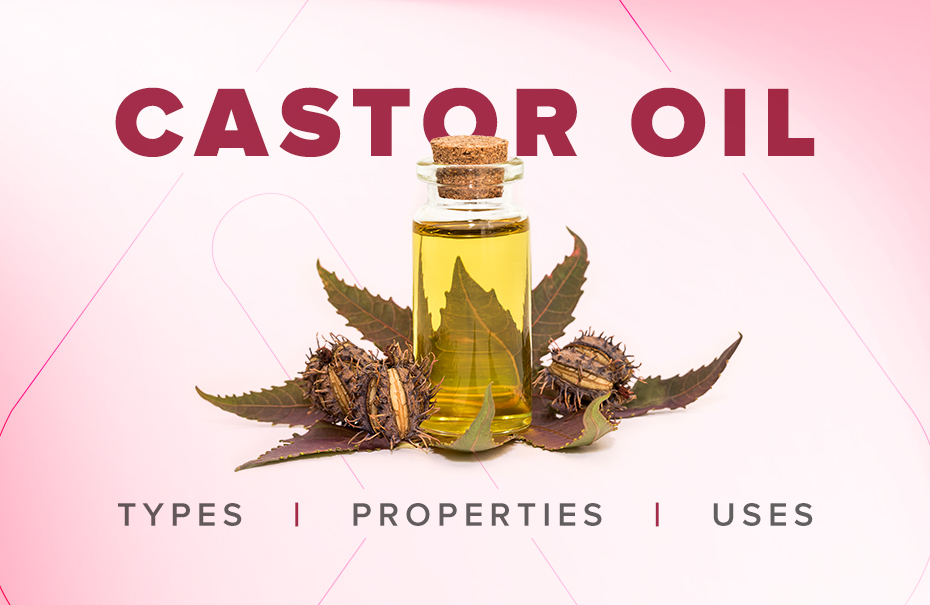
Castor oil is commonly found in beauty, cosmetics and hair care products but has many more uses than just personal care. It is also a useful raw material in making paints, coatings, lubricants, and medicines.
Why is castor oil widely used in so many industries? It’s because castor oil has a unique component, which is ricinoleic acid.
Understanding the properties of different castor oil types and grades helps businesses select the most suitable option for their specific industrial applications. Let’s explore more.
What is Castor Oil?
Castor oil is a vegetable oil made from the seeds of the Ricinus communis plant. It is usually pale yellow to nearly colourless and has a naturally thick consistency.
One of its main components is ricinoleic acid, which generally makes up around 85–90% of its fatty acid composition. As a result, castor oil has unique properties and may be used to make several industrial chemicals and derivatives.
But not all products made with castor oil are the same. The quality and performance of castor oil depend on how it is extracted and processed. The right type should be selected based on its intended application and the specific requirements of the final product.
What are the Different Types of Castor Oil?
1. Cold-Pressed Castor Oil
In cold-pressed methods, castor oil is extracted mechanically to reduce excessive heat. It has a wide range of applications, including in personal care, haircare, and skincare products.
Because the oil has less heat exposure during extraction, it is sometimes selected for use in applications where the natural qualities are desirable. The quality of the product is also affected, however, by the seeds, the extraction conditions, and subsequent handling of the oil.
2. Jamaican Black Castor Oil
Traditional methods of producing Jamaican black castor oil involve roasting castor seeds prior to processing. This accounts for the dark colour of the oil.
It’s primarily used in haircare and personal care items. While different from regular castor oil, a darker oil does not necessarily indicate a higher quality castor oil. The right choice will depend on the purpose and the specifications of a product.
3. Refined Castor Oil
Cleaned castor oil goes through a treatment to ensure it meets quality and appearance standards. This can result in colour control and elimination of some impurities.
Depending on its grade, refined castor oil is used in industrial formulations, cosmetic products, and other applications that require consistent quality and purity.
4. Pharmaceutical-Grade Castor Oil
Pharmaceutical-grade castor oil is produced and tested to meet the standards of the pharmaceutical industry. This includes standards of purity and identity, as well as other quality parameters.
Before using the product for pharmaceutical preparation, it is recommended to check the quality of castor oil along with the relevant documentation.
5. Hydrogenated Castor Oil
Hydrogenated castor oil is produced through the chemical process of hydrogenation of castor oil; as a result, castor oil changes its consistency to a solid, waxy product.
In its hydrogenated form, castor oil is used to formulate waxes, lubricants, coatings, and thickening agents, particularly in applications that require enhanced stability and specific functional properties.
Among the other special varieties of castor oil are dehydrated castor oil and Turkey red oil, both of which can be used in some industries and chemical production.
Key Properties of Castor Oil
Castor oil has a number of properties that make it useful for a wide range of applications, in both consumer goods and industrial production.
- High viscosity: Castor oil is of high viscosity; therefore, it can be used for lubricating formulations.
- High ricinoleic acid content: This is one of the main reasons for the uniqueness and utility of castor oil in chemical applications.
- Moisture absorption properties: It has the properties to absorb moisture; thus, it can be used in some formulations of personal care, cosmetics, and skin care.
- Chemical versatility: Castor oil can be used to form many kinds of derivatives, such as hydrogenated castor oil and dehydrated castor oil.
- Industrial uses: Castor oil and its derivatives can be used, depending on their grades, in the production of coatings, adhesives, and inks.
Apart from these properties, several technical factors must be considered when selecting castor oil. These include viscosity, moisture content, acid value, colour, and other specifications that determine its suitability for the intended application.
What is Castor Oil Used For?
1. Cosmetics and Personal Care
Castor oil is used in cosmetic formulations for hair care, skincare, and lip care products. Its thick consistency and chemical composition make it a useful ingredient in these products.
Cold-pressed castor oil and Jamaican black castor oil are particularly popular in the personal care market.
2. Pharmaceutical Applications
Castor oil that meets the required quality standards is used in certain pharmaceutical formulations. Manufacturers must select a grade that meets the specific quality and performance requirements of the intended formulation.
3. Paints, Inks, and Coatings
Castor oil derivatives are widely used in paints, varnishes, inks, and coatings production. Dehydrated castor oil is, for instance, employed for alkyd resins as well as the base oil for coatings.
The right derivative is determined by the formulation and the requirements for a successful coating.
4. Lubricants and Industrial Formulations
The thick texture of castor oil is suitable in lubricant and grease formulations. High-quality castor oil derivatives can be applied where certain flow and functional properties are required.
The choice of castor oil depends on the operational conditions and technical needs.
5. Textiles and Specialty Chemicals
Castor oil derivatives are used in textile processing, adhesives, and other specialty chemical applications. Turkey red oil, for instance, is another processed castor oil that is employed in fabric dyeing and finishing.
These applications demonstrate the potential for using castor oil as both an ingredient and a feedstock for high-value chemical products.
Choosing the Right Castor Oil Manufacturers
When looking for a reliable castor oil supplier, your decision should not be based only on price. Check the specifications of the oils and their quality certificates to ensure that it meets the required grade standards and maintains consistent product quality.
India has established itself as a key contributor to the worldwide castor oil market. In fact, castor seed production is expected to reach 1.76 million tonnes in 2025-26, which is 11% more than in the previous year.
When selecting a castor oil supplier, it is essential to pay attention to product quality, necessary technical documentation, reliability in product supply, and specifications for castor oil uses.
Conclusion
Castor oil is an ingredient used in various industrial applications, from the cosmetic and pharmaceutical fields to industrial products. Knowing the differences between cold-pressed oil, refined oil, pharmaceutical-grade oil, and hydrogenated oil helps you choose the correct oil for your needs.
Ambuja Solvex offers castor oil products and derivatives for various industrial applications. At Ambuja Solvex, we help you with understanding the appropriate product range to meet your specific requirements.
Looking for a dependable castor oil supplier for your business? Partner with Ambuja Solvex now!
FAQs
1. What is castor oil used for mainly?
Castor oil is widely used in cosmetics, medicines, lubricants, paints, coatings, and specialty chemicals.
2. How is cold-pressed castor oil different from Jamaican black castor oil?
Cold-pressed castor oil is extracted mechanically from castor seeds without the use of external heat, while Jamaican black castor oil is produced by roasting the seeds before processing them to extract the oil.
3. Is refined castor oil suitable for industrial applications?
Yes, the oil can be used for this purpose as long as the oil specifications match the requirements of the industry.
More Insights From The Castor World