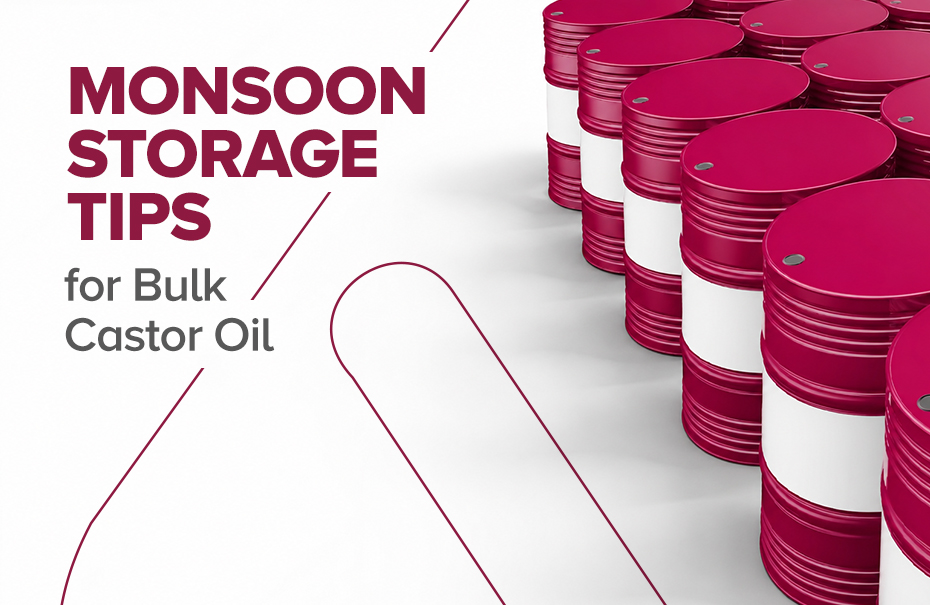
Monsoon Storage Tips for Bulk Castor Oil: Preventing Moisture Contamination
If proper precautions are not taken, the quality of bulk castor oil can deteriorate during the rainy season. Despite the well-known stability of castor oil and its numerous applications in industry, moisture, temperature fluctuations, and contamination during the monsoon season can affect the quality and performance of castor oil.
It is particularly relevant for industries such as pharmaceuticals, cosmetics, paints, chemicals and personal care that rely on high-quality castor oil. Even small amounts of moisture in castor oil can affect the manufacturing process, shelf life, and final product quality.
Let’s look at some practical monsoon storage tips for bulk castor oil so that you can maintain a consistent product quality throughout the monsoon season.
The Importance of Effective Strategies for Storing Bulk Castor Oil in Monsoon
The monsoon season brings high humidity, rapid temperature fluctuations, and persistent dampness.
Humidity can come in from places you don’t expect. Moisture can enter storage systems through condensation in tanks, inadequate drum sealing, improper handling during transport, and repeated opening of containers.
These seemingly minor issues can result in significant financial losses for businesses handling bulk castor oil.
Also, India remains one of the world’s largest producers and exporters of castor oil, accounting for nearly 85–90% of global castor seed production, making storage quality a key factor in maintaining export competitiveness.
How Moisture Affects Castor Oil Quality
Castor oil is hydrophobic, but exposure to moisture may cause quality concerns throughout the supply chain.
The most significant impacts are:
- Increased risk of microbial growth in contaminated storage environments
- Reduced consistency during manufacturing
- Difficulty meeting quality requirements
- Reduced shelf life due to poor storage conditions
- Additional costs for filtration and quality testing
For high-value industrial manufacturing, moisture-free storage directly affects manufacturing efficiency and product reliability.
Common Sources of Moisture Contamination
The first step to moisture prevention is to know where it is coming from.
1. Condensation Inside Storage Tanks
Water vapor can condense in partially filled storage tanks when the temperature during the day is warm and the temperature at night is colder. This moisture can contaminate the stored castor oil over time.
2. Improper Drum Sealing
During monsoon season, the containers may be exposed to humid air through loose caps, deteriorated gaskets, or damaged drum lids.
3. Poor Warehouse Ventilation
Warehouses with poor air circulation are subject to high levels of moisture. Moisture can accumulate through condensation, affecting storage conditions and product quality.
4. Transportation During Heavy Rain
Drums and intermediate bulk containers (IBCs) are at risk of contamination when loaded or unloaded in open areas exposed to rainfall.
5. Frequent Container Opening
Repeated exposure to humid air can increase the risk of moisture entering the storage and transfer systems.
Signs Your Stored Castor Oil May Be Affected by Moisture
Regular quality checks can be used to detect issues before they affect production.
Watch for:
- Cloudiness or haziness
- Unusual sediment formation
- Changes in odor
- Reduced clarity
- Packaging corrosion
Early detection allows corrective action to be taken before moisture-related quality issues compromise the batch.
6 Bulk Castor Oil Storage Tips in Monsoon
1. Store Oil in Temperature-Controlled Warehouses
Stable room temperatures lower the chances for condensation to form.
Avoid extremely high temperatures in the day and drastic temperature changes at night in storage facilities. A controlled environment helps maintain product quality and stability.
2. Use High-Quality Castor Oil Packaging
Packaging is one of the most critical elements in protecting castor oil from moisture.
Choose packaging that is specially designed for industrial oils like:
- Epoxy-coated MS drums
- HDPE drums
- Stainless steel storage tanks
- Food-grade Intermediate Bulk Containers (IBCs)
- ISO tank containers for international transportation
Packaging should be designed to provide greater moisture protection and to be safe for transport.
3. Keep Storage Tanks Properly Sealed
Every opening creates an opportunity for humid air to enter. Inspect seals regularly, replace damaged gaskets, and open the tank only when necessary during the rainy season.
Any improvement in maintenance can make a big difference in contamination risk.
4. Maintain Low Inventory Headspace
The larger the storage tank volume, the more likely condensation will occur.
Avoid leaving excessive headspace in storage tanks, as larger air volumes can increase the potential for condensation when temperatures fluctuate.
This is a simple technique that will allow you to keep the oil for longer periods of time.
5. Install Moisture Monitoring Systems
Modern storage facilities increasingly use humidity sensors and moisture-monitoring equipment.
The systems are able to deliver early warnings when environmental conditions become unfavourable, so that corrective action can be taken before contamination occurs.
Routine inspections remain equally important alongside automated monitoring.
6. Inspect Containers Before Dispatch
Quality assurance should not stop at storage.
Before transportation:
- Check drum seals
- Inspect packaging integrity
- Ensure loading areas are protected from rain and excessive moisture.
- Protect transport vehicles from exposure to weather
- Protect the product from rain exposure during loading.
These last checks ensure that the product remains safe till it reaches customers.
Conclusion
While the monsoon season cannot be avoided, moisture contamination can be minimised with proper storage practices. Businesses can use appropriate storage methods to keep castor oil products in good condition throughout the monsoon season.
Choosing a bulk supplier of castor oil who is committed to quality manufacturing and delivery is also critical. At Ambuja Solvex, advanced manufacturing, rigorous quality control, and reliable packaging come together to ensure we produce premium-quality castor oil that meets international standards
| For more effective monsoon storage solutions for bulk castor oil, contact us today. |
FAQs
1. Why is moisture in castor oil considered a problem during monsoon?
Too much moisture in castor oil can impact product consistency, processing, and storage stability. Excessive moisture can compromise oil quality and reduce its shelf life.
2. What is the most suitable packaging for bulk castor oil during the rainy season?
Epoxy-coated steel drums, stainless steel tanks, and suitable IBC containers can provide effective protection against environmental exposure when properly sealed and maintained.
3. Why should businesses choose an experienced bulk supplier of castor oil?
An experienced supplier can provide robust quality control, moisture-resistant packaging, laboratory testing, and reliable logistics processes.
More Insights From The Castor World